
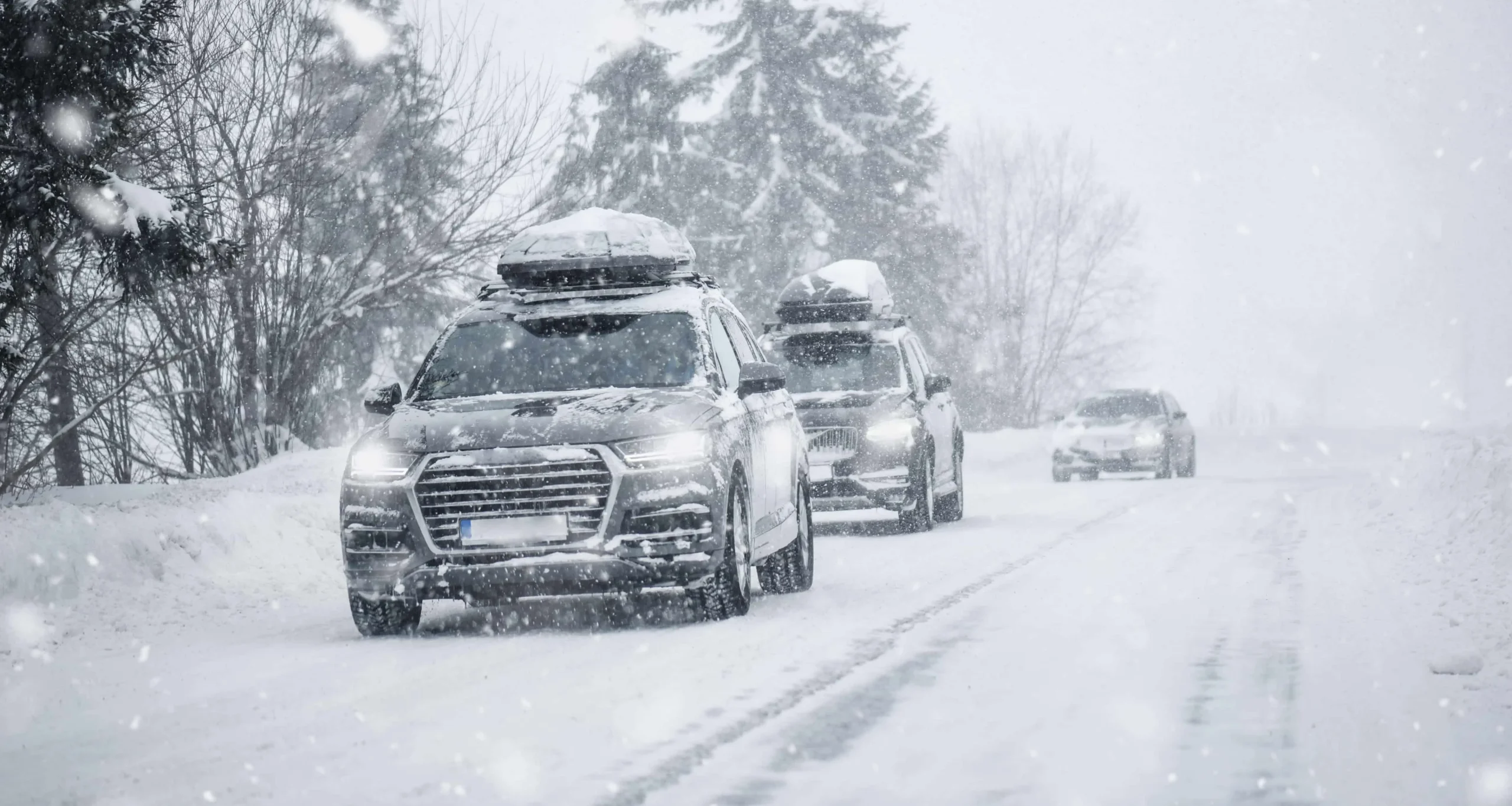
Winter road trips require preparation before you leave the rental location. Learning how to
winterize your rental carmeans choosing a suitable vehicle, confirming winter tyre availability, checking essential features and preparing for changing weather. From inspecting the tyres, wipers and defrost systems to packing emergency supplies and reviewing permitted routes, this guide explains how to prepare for a more informed and safer cold-weather journey.
AI Summary Prompt Tools
Executive Summary
Consider the destination, road conditions, passenger count, luggage and winter equipment requirements. Booking early gives you more time to compare vehicle categories and confirm details with the pickup branch.
Compact cars and sedans may suit cleared city roads and highways, while SUVs and minivans can offer extra room for passengers and winter gear. Vehicle assignment and features depend on the reserved category and location.
Winter tyres are not guaranteed with every rental. AWD is available only in select SUVs, and it helps with acceleration rather than braking or cornering grip. Confirm the specific vehicle's equipment directly with the branch.
Review official forecasts, alerts and road reports before departure and during your trip. Build in extra time, identify alternative routes and postpone travel when conditions make driving unsafe.
Check tyres, wipers, washer fluid, heating, defrost systems, lights, windows, mirrors, fuel or charge level, dashboard warnings and existing damage. Learn the vehicle controls and save roadside assistance details before leaving.
Keep warm clothing, gloves, a blanket, water, snacks, a flashlight, a charged phone, a power bank and an ice scraper accessible. Confirm which emergency items are included instead of assuming they come with the rental.
Winter Adventures Are Better When You're Prepared
Snow starts falling halfway through the first hour of the drive. The rental car handles the highway well enough until the exit ramp, where the driver eases off the accelerator and feels the tires slide instead of grip. Questions arrive faster than answers: does this car have suitable tires, is the washer fluid rated for freezing temperatures, and what is the plan if the weather gets worse?
Those questions are worth asking before the trip, not during it. Learning how to winterize your rental car experience is not about modifying the vehicle yourself; it is about selecting an appropriate rental car, confirming essential winter features with the provider, preparing for changing weather, and adopting safer driving habits.
A comfortable winter road trip doesn't begin when you start the engine. It begins with the right rental car, the right preparation, and the confidence to handle changing road conditions.
Your Winter Road Trip Begins Before the Booking
October is when preparation quietly pays off. Temperatures start falling across many Canadian and northern US destinations, snow arrives earlier than expected in some regions, and travellers begin planning winter vacations, holiday journeys, and seasonal road trips.
Before reserving a vehicle, take a moment to understand the trip itself. Does the destination regularly see snow or ice? Will the journey include highways, mountain roads, or long stretches without services? How many people are travelling, and how much luggage is coming along? Are there winter equipment or tire requirements along the route?
These questions shape everything that follows, from the vehicle category that makes sense to the questions worth asking the rental provider. A route between Toronto and Mississauga asks something different of a car than a drive into the Rockies, and a family with skis and suitcases needs different space than two travellers with a weekend bag.
Timing matters too. Booking early gives you a wider choice of vehicle category and pickup location, and leaves room to sort out winter equipment before demand climbs. Rental inventory for popular holiday periods can be reserved weeks in advance in ski towns and snowbird destinations, so travellers who wait until the last week of December often choose from what is left rather than what suits them. Early booking also leaves time for the conversation with the pickup branch about tires, routes, and equipment, which is far easier to arrange before the holiday rush than during it.
It is also worth deciding how flexible the trip really is. A journey with a fixed return flight or a non-refundable accommodation booking leaves less room to wait out a storm than one where dates can shift. Knowing which days are movable helps you plan around weather rather than through it, and it is easier to accept a delay when the rest of the itinerary can absorb it.
Finding the Right Rental Car for Your Winter Adventure
There is no single best rental car for winter driving, only a best fit for a particular journey. A compact car can be a sensible choice for a city visit with light luggage and mostly cleared streets. A sedan offers a little more room for a longer drive between cities. For families, winter clothing, and bulky bags, an SUV or minivan can make the difference between a cramped drive and a comfortable one.
What matters is matching the vehicle to the actual roads and conditions: cleared city streets, plowed highways, gravel access roads, or mountain passes. Vehicle models are examples rather than guaranteed assignments, and availability depends on the reserved category and the pickup location, so it is worth browsing Zoom’s rental vehicle categories and confirming details for the specific branch before booking. For travellers planning a mountain route, the standard SUV category is worth comparing; for city and highway trips with lighter luggage, the compact car options may be the practical choice.
Explore Rental Fleet Options for Winter Travel
Different journeys call for different categories. Compact cars and sedans suit urban journeys and regularly maintained roads, with easier parking and predictable handling. SUVs offer additional luggage space and passenger comfort, which matters once winter clothing and gear join the packing list. Some SUVs are equipped with all-wheel drive, which suits situations where additional acceleration traction may be beneficial, such as pulling away on snow or climbing a slushy hill. Minivans and larger passenger vehicles carry families and groups, along with the bags and equipment they travel with.
Drivetrain, tire suitability, ground clearance, and vehicle availability all depend on the specific model and the reserved category, so treat the guide below as a starting point and confirm details with the pickup branch. AWD is available in select SUVs only, and its availability is not guaranteed for every booking, so it should be confirmed directly with the pickup branch rather than assumed from the category name.
| Vehicle Category | Suitable Travel Needs | Passenger Considerations | Winter Equipment Checks |
|---|---|---|---|
Compact Car |
City trips, cleared urban roads, light luggage |
Couples or small families with one or two bags |
Confirm tire type and washer fluid condition |
Sedan |
Longer highway drives, modest luggage |
Up to five passengers with moderate comfort |
Confirm tires, heating, and defrost operation |
SUV |
Family trips, winter gear, mixed or mountain routes |
Five passengers with generous cargo space |
Confirm tire suitability and whether the specific model has AWD, since AWD appears only in select SUVs |
Minivan or Passenger Van |
Families, groups, reunions, bulk luggage |
Seven to twelve passengers depending on category |
Confirm tire type, heating performance, and equipment provisions |
Larger groups can also review the 12-passenger extended van category. No SUV should be assumed to include AWD; confirm the specification for the actual vehicle at the branch.
Does All-Wheel Drive Really Make a Difference in Snow?
All-wheel drive can help a vehicle maintain traction while accelerating, particularly when pulling away on snow or climbing a hill. What it does not do is shorten stopping distances or improve steering grip. Those come from the tires and the driver.
An AWD badge is not permission to travel faster, and it is not a substitute for suitable tires. Winter tires, cautious driving, and honest assessment of the roads matter just as much as which wheels receive power. Drivers who understand this tend to make calmer decisions when the weather turns.
Ground clearance is worth a moment of thought as well. Deep snow at the end of a rural driveway, an unplowed parking area, or a resort access road can challenge a low car regardless of its tires. That does not mean every winter trip needs a tall vehicle; it means the route should inform the choice. Travellers who expect to leave cleared roads should say so when booking, because vehicle assignment depends on the reserved category and fleet availability at the pickup location.
Rental agreements can also carry geographic conditions that matter more in winter than summer. Some contracts restrict travel to certain provinces, states, or road types, and remote routes may sit outside roadside assistance coverage. Reading those terms before the trip is part of choosing the right car, because the best vehicle for the journey is one you are actually permitted to take there.
Winter Tires: The Detail That Makes a Difference
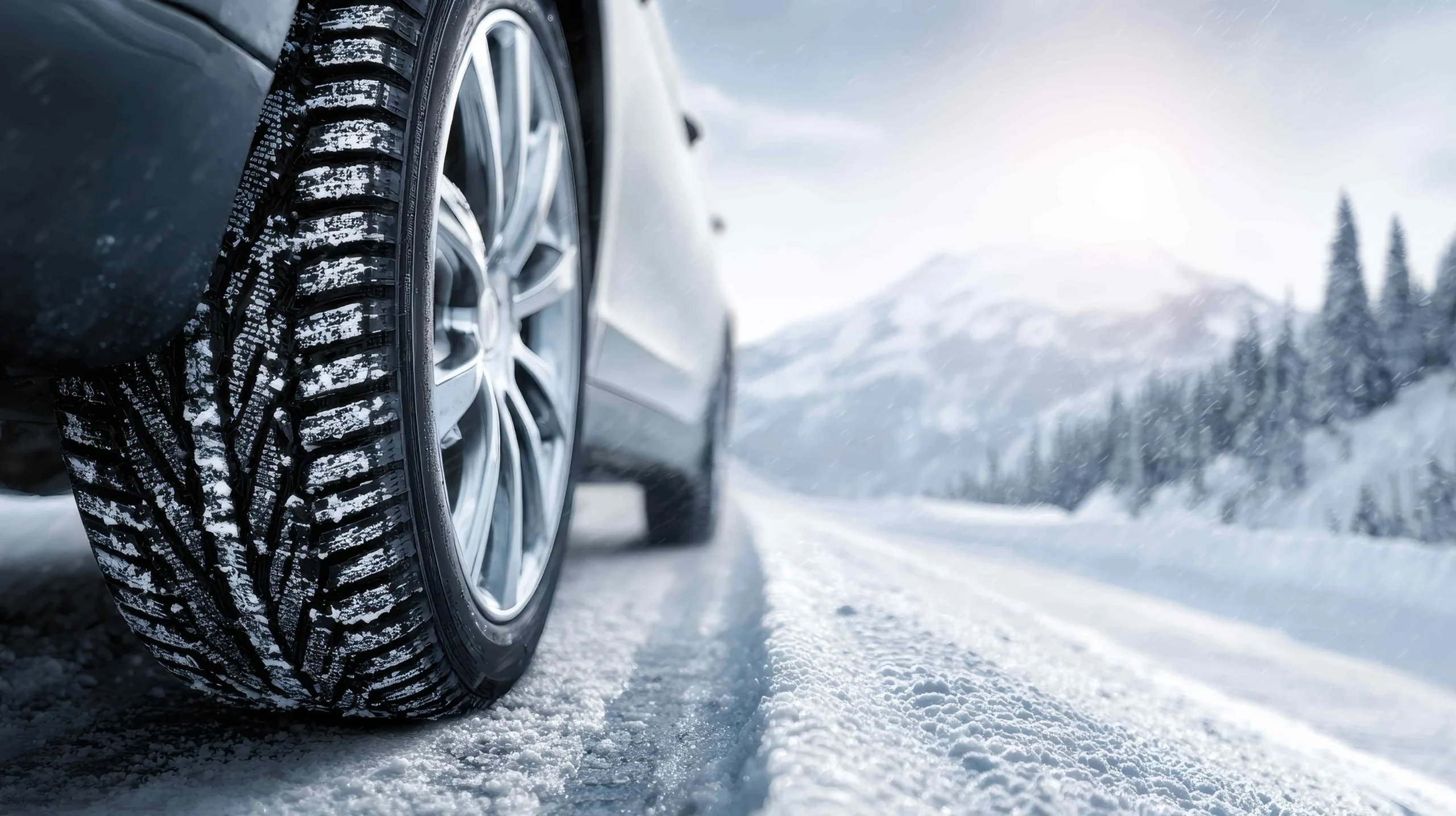
Tire performance changes with temperature. All-season tires are designed to handle a range of conditions, but their rubber compounds harden as temperatures fall, which reduces grip in cold weather. Winter tires use softer compounds and tread patterns designed for cold, snow, and slush, and they can provide noticeably more suitable grip when temperatures stay near or below freezing.
Tire condition matters as much as tire type. A worn tire, whatever its designation, offers less tread to channel snow and water away from the contact patch. Regulations also vary: some provinces and mountain routes have winter tire requirements or recommendations during specific months, and the rules where the car is collected may differ from the rules along the route. Consult Transport Canada’s road transportation guidance to understand national context, and confirm the requirements for the specific roads you plan to drive.
Winter tire arrangements vary by rental location, and there is no guarantee that a rental vehicle will come fitted with winter tires. Ask the pickup branch directly whether winter tires are available for your reserved vehicle, and confirm the arrangement before booking rather than assuming anything from the vehicle category. AWD alone does not guarantee safe driving on snow or ice; the tires and the driver carry most of that responsibility.
Before You Say Yes to the Rental, Ask These Tire Questions
A short conversation with the pickup branch settles details that a booking page cannot:
Are winter tires installed on this vehicle, or available for it?
Do the tires meet the requirements for the destination and route?
Are there additional charges for winter equipment, and what do they cover?
Are there restrictions on travelling to particular winter destinations or mountain routes?
Asking these questions in advance protects the trip twice over: it ensures the vehicle is equipped for the roads, and it prevents surprises at the counter on pickup day.
It helps to understand why the tire distinction matters so much. A tire’s grip comes from its rubber compound and its tread. In cold conditions, a compound designed for warm weather stiffens and loses its ability to conform to the road surface, which reduces friction even on dry pavement. Winter compounds stay more pliable in low temperatures, and their tread patterns carry deeper grooves and small slits that bite into snow and channel slush away. That combination is why a winter tire can outperform an all-season one in exactly the conditions where control matters most, and why a worn all-season tire can be the weakest link on a winter trip.
Travellers who plan to drive in several regions during one trip should also remember that tire rules are not uniform. Some jurisdictions require winter tires by date on certain routes, others rely on advisories, and mountain passes can enforce requirements when conditions deteriorate. Since enforcement and recommendations vary, the safest approach is to ask the pickup branch about the route and follow official provincial or state guidance rather than assuming one rule applies everywhere.
Check the Forecast Before You Follow the GPS
A GPS route shows distance and direction; it says nothing about the weather at the far end. Snowfall, freezing rain, fog, shorter daylight hours, and unexpected road closures all change what a journey demands.
Check the forecast before setting out, then monitor updates during the drive. Environment and Climate Change Canada provides forecasts and weather alerts through its official weather service, and travellers driving through British Columbia can review DriveBC road conditions and travel advisories for current highway conditions. Build extra time into the schedule so that slow traffic and poor visibility do not tempt rushed decisions, and identify an alternative route and safe places to pause along the way.
When Changing Your Travel Plans Is the Smartest Decision
There is a point in every winter journey where the wisest move is to stop, wait, or turn around. If a storm closes a highway, if freezing rain arrives faster than forecast, or if visibility drops to the point where driving feels like guessing, the most experienced response is to postpone.
Vehicle features help in ordinary winter conditions. They do not make severe weather safe to drive through. A delay is rarely just a comfort choice; it is often the safer and more practical decision. Drivers who accept this early tend to arrive more relaxed than those who push through conditions they cannot manage.
Practical flexibility starts with knowing your options before you leave. Check whether your route has an alternative highway, identify towns along the way where an unexpected overnight stop would be possible, and note where fuel and charging stations thin out. Travellers with flexible dates can watch the forecast for a few days and choose the calmest window; travellers with fixed plans can instead build generous buffers into the schedule, leaving early in the day so that any delay still arrives before dark. Either way, the decision to postpone is easier when someone at home or at the destination knows the route and the expected arrival time.
Winter also shortens the usable day. Darkness falls early, and many rural stretches have no lighting at all, so a delay of two hours can turn a comfortable drive into a demanding night journey. Planning to finish the driving before dusk is one of the simplest ways to reduce risk without changing the destination.
Five Minutes at Pickup Can Prevent Winter Travel Problems
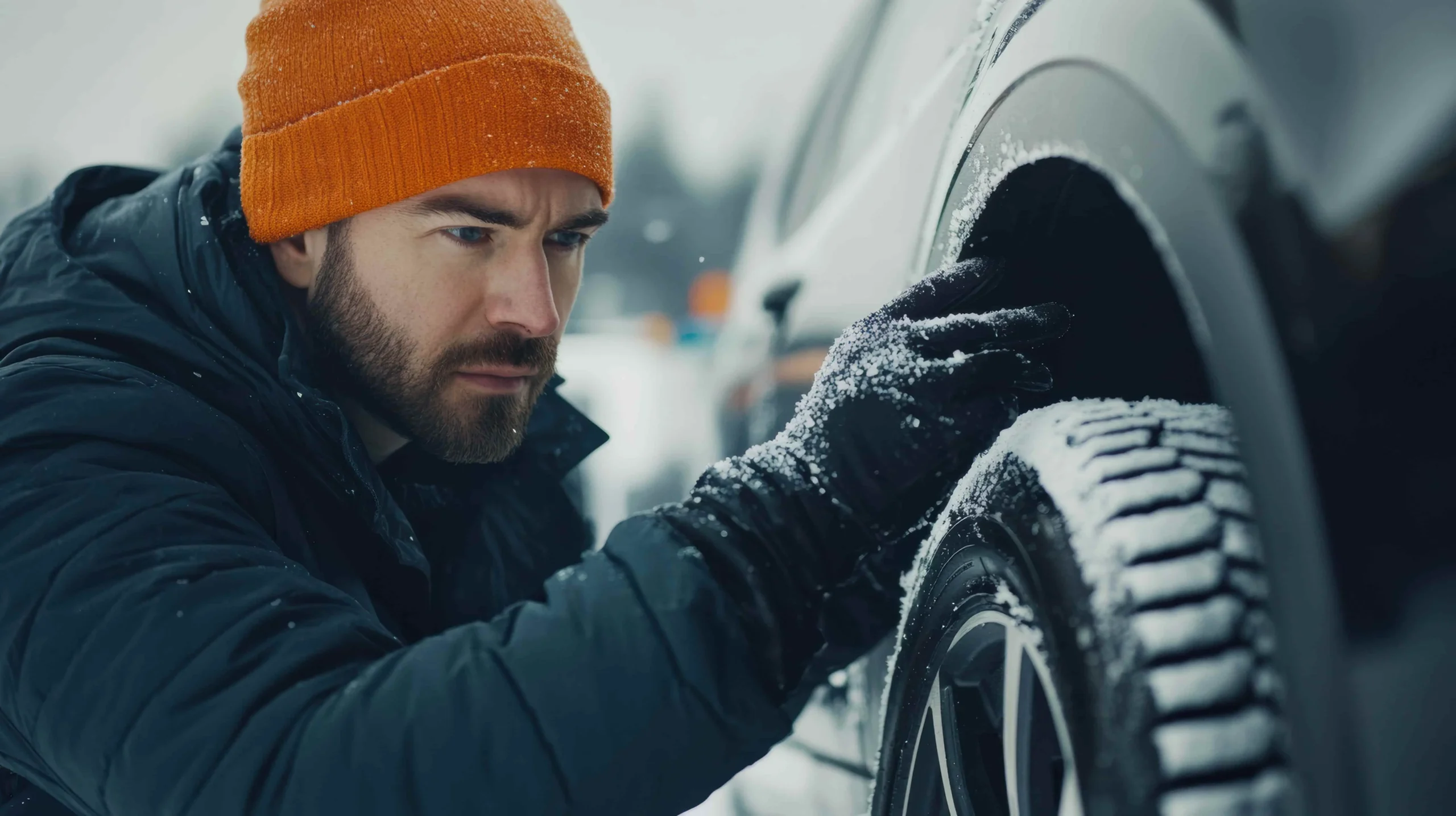
The pickup handover is the best opportunity to understand the vehicle, and winter makes certain checks more important than they would be in July.
Before leaving the rental location, take five unhurried minutes. Walk around the car, look at the tires, and ask about anything unfamiliar. Test the wipers and washer spray, confirm the heater and front and rear defrost work, and check that headlights, brake lights, and indicators function. Look at windows and mirrors for chips or cracks, note the fuel or charge level, review any dashboard warnings, and record existing damage according to the rental company’s process. Confirm the emergency contact and roadside assistance information before you need it.
Your Essential Winter Rental Car Pickup Checklist
Winter tire availability and visible tire condition.
Windshield wipers and washer fluid.
Heating and defrosting systems.
Headlights, brake lights, and indicators.
Mirrors, windows, and visibility.
Fuel level or battery charge.
Dashboard warning lights.
Existing vehicle damage.
Emergency equipment and roadside assistance information.
If something does not work as expected, raise it with staff before driving away. It is far easier to resolve a concern at the counter than to describe it by phone from a snowbank an hour later.
It is also worth understanding the vehicle before conditions get difficult. Winter often means driving a model you have never sat in, and unfamiliar controls are harder to find when the windshield is fogging. Take a moment at pickup to learn the wiper settings, the defrost controls, the headlight switch, and the hazard lights, and ask how the vehicle behaves in snow if the staff know the fleet. If the car carries any driving assistance or warning systems, understanding what its alerts mean before they sound is far better than guessing on an icy road.
Familiarity with the agreement matters in winter too. Knowing the mileage allowance, the fuel policy, and the procedure for reporting a problem means that if weather forces a change of plan, you can make decisions quickly without wondering whether they conflict with the rental terms. Travellers who expect to return the car early because of a storm should confirm how early returns are handled before pickup day rather than after.
Pack for the Unexpected, Not Just the Destination
A family driving to a snowy cabin expects the trip to go to plan. The pack list should assume it might not. Winter travel can take longer than expected, roads can close, and waits can happen in places with no services nearby.
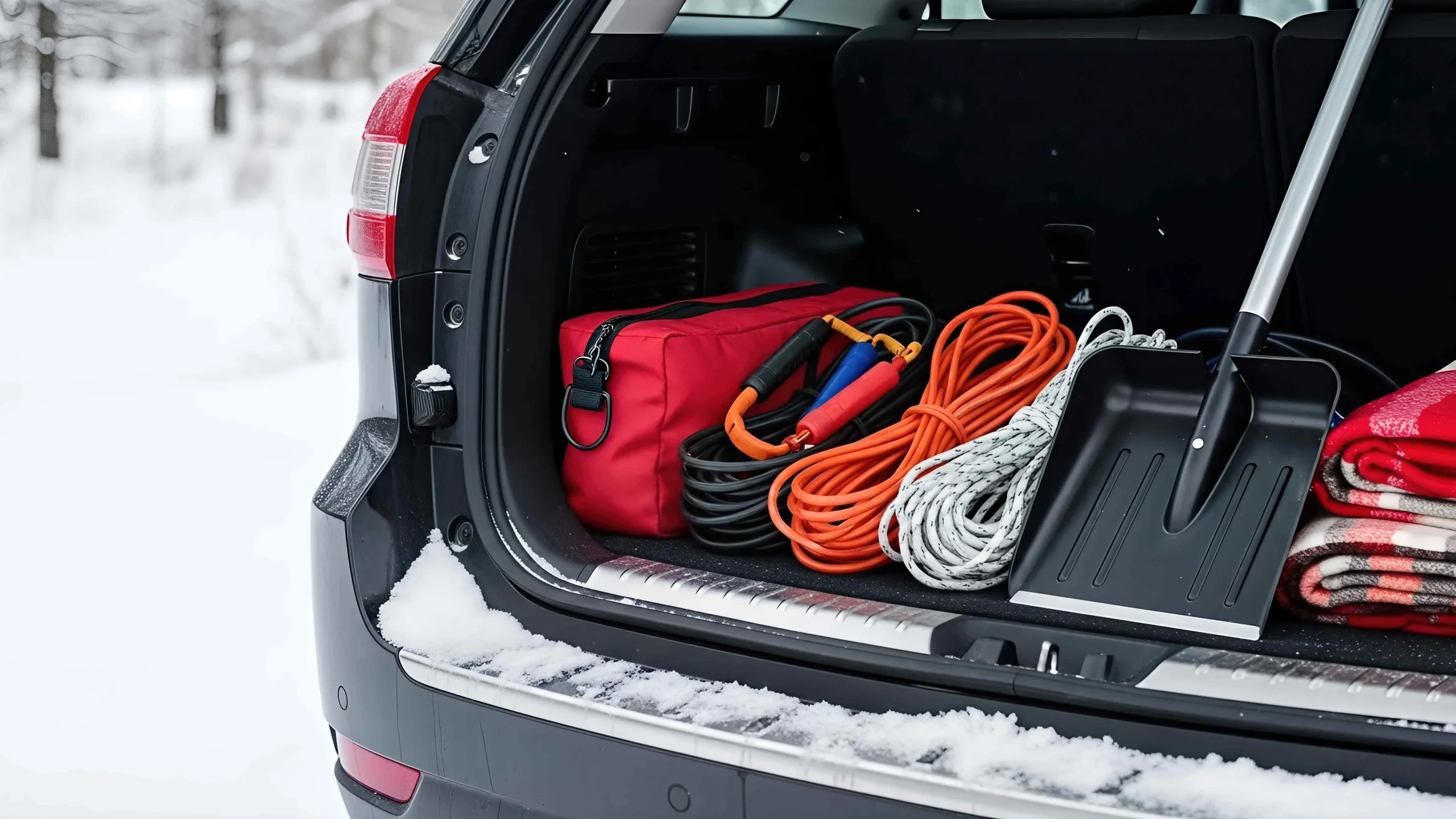
Keep warm clothing, gloves, and a blanket within reach of passengers. Water, snacks, a flashlight, a charged phone, a portable power bank, and an ice scraper make an unplanned pause far more manageable. For longer or more remote routes, consider supplies suited to the destination, such as extra food or a small shovel. Store heavier items low and secured so they do not shift under braking.
Ask the rental location which emergency items, if any, come with the vehicle, and bring additional supplies yourself rather than assuming the car is equipped. Do not count on a scraper or emergency kit being included unless the location confirms it.
How you pack matters as much as what you pack. Keep the emergency supplies inside the cabin rather than in a trunk that could be buried under snow, and place the blanket, flashlight, and charger within reach of the driver. Pack the heavier bags low and behind the rear seats so they cannot shift forward under braking, and leave the space around the driver’s feet clear so pedals cannot catch on loose items.
A short word on clothing: winter trips often involve moving between heated interiors and cold exteriors several times a day, and layered clothing handles that better than one heavy coat. Gloves matter more than they first appear, because a cold steering wheel and a frozen fuel cap are both easier to deal with wearing them. Sturdy footwear helps too, whether the task is digging out around the tires or walking to a service station.
Winter Driving Is About Control, Not Confidence
Confidence is useful on dry roads and dangerous on icy ones. Winter driving rewards patience and anticipation: reduce speed to match visibility and road conditions, leave much more following distance than feels necessary, and accelerate, brake, and steer smoothly rather than abruptly.
Look further down the road than usual, and keep windows, mirrors, and lights clear so you can see and be seen. Snow, ice, fog, and blowing snow each change how a vehicle responds, and the adjustments are less about skill than about accepting that conditions have changed.
Certain surfaces deserve particular respect. Bridges and overpasses freeze before the roads around them because cold air circulates beneath them, so a stretch that felt dry a moment ago can be slick on the span. Black ice often forms in thin, transparent sheets that look like wet pavement, and it tends to appear in shaded areas and early mornings. Intersections where cars have packed snow into polished ruts, and the gravel edges of cleared roads, each behave differently from the plowed lane, and smooth inputs matter most exactly where grip is lowest.
If the car does begin to slide, the general principle is to stay calm and make gradual inputs: ease off the accelerator, look where you want the vehicle to go, and steer gently in that direction rather than braking hard or making sudden corrections. Nothing in this article replaces a driver’s judgement of the actual conditions in front of them, which is precisely why the earliest and cheapest safety decision is often choosing not to drive at all.
The Mistake Many Drivers Make with AWD Vehicles
The most common winter driving error involves AWD, and it is understandable: the car pulls away confidently from a stop, so the driver assumes it will behave the same way in a corner or under braking. It will not. AWD helps a vehicle accelerate on slippery surfaces, but it cannot overcome limited tire grip during braking or cornering.
Stopping distances on ice are longer for every vehicle, whatever the drivetrain. The drivers who navigate winter best are usually the ones who treat AWD as a small advantage in specific situations, not as a general licence for speed. No vehicle or drivetrain removes the risks of hazardous winter roads.
Cold Weather Changes More Than the Road
Winter temperatures affect the vehicle as well as the driver. Battery performance drops in cold conditions, tire pressure falls with temperature, and fuel efficiency can decrease. Windshield visibility becomes a bigger factor, both from frost and from condensation, so understanding the heating and defrost settings before departure matters.
Keep an appropriate fuel reserve, particularly on routes with long stretches between services, and pay attention to warning indicators rather than hoping they clear. If a warning appears or the vehicle develops a mechanical issue, contact the rental provider rather than attempting repairs or modifications yourself.
Electric vehicles deserve a note here: their driving range can decrease noticeably in cold conditions, so check the vehicle’s range information and plan charging stops with a margin for weather, detours, and delays. Cabin heating draws on the battery while driving, so a trip that feels comfortable in summer can arrive with a lower reserve in winter. If an EV is an option for the trip, ask about charging guidance and location-specific instructions before setting out, and identify charging stations along the route before relying on them.
Tire pressure deserves a specific mention. Pressure falls as temperatures fall, and a tire that was correctly inflated in a warm garage can be noticeably low on a cold morning. Underinflated tires handle worse and wear unevenly, so it is worth checking pressures partway through a long winter trip, especially if temperatures drop significantly along the way.
Fuel deserves a specific mention too. A fuller tank provides a margin of safety if a detour or a closed highway extends the journey, and it also keeps the fuel system working in extreme cold. Keeping the tank well above half on remote routes is a simple habit with real value in winter conditions.
Before You Book: The Winter Rental Confirmation Checklist
Most winter rental surprises trace back to details that were never confirmed. Work through this short list before finalising the booking:
Confirmed vehicle category and AWD specifications, if required.
Winter tire availability and applicable regulations.
Mileage limits and permitted routes.
Insurance or protection options.
Fuel policies and security deposits.
Roadside assistance arrangements.
Winter equipment availability.
Pickup and return requirements.
This list complements the pickup checklist above: one covers the booking, the other covers the vehicle. Terms can differ by branch and vehicle class, so confirm them for the specific pickup location rather than relying on general information. CAA’s rental car guidance offers further questions worth considering before finalising plans.
A few of these items deserve emphasis because they catch travellers most often. Mileage limits matter more in winter than summer, because snow routes and detours add distance, and some contracts count cross-border travel differently even when the destination is close. Protection options deserve a careful read as well, since what a credit card or personal policy covers can differ from what the rental agreement assumes. And roadside assistance should be understood before departure: knowing who to call, what is covered, and how long help may take in a remote area turns a breakdown into a delay rather than a crisis.
If anything in the agreement is unclear, ask the branch to explain it before signing. A minute of clarification at booking is cheaper than a disputed charge after the trip, and rental teams would rather answer a question now than resolve a complaint later.
Make Winter Travel Easier with Zoom Rent A Car
A well-planned winter rental starts with matching the vehicle category and pickup location to the trip. Zoom Rent A Car has served travellers since 1999 and operates more than 30 locations across Canada, the United States, and the Caribbean, including major airports such as Toronto Pearson and Vancouver International.
Travellers can explore the locations available for their itinerary, compare the standard SUV category for mountain routes or the compact car options for city trips, and contact the pickup branch directly to ask about winter tire availability and AWD specifications for the specific vehicle. The Zoom rental FAQ answers general rental questions, while location-specific terms should be checked with the branch.
Travellers who want to compare rates across providers can also use Zoom’s price match process, and those planning longer winter trips may find value in the discounted rental arrangements described on the website. Families heading to a ski resort or a holiday gathering can review the standard SUV category alongside the 12-passenger extended van for larger groups, while travellers who prefer to start from the city rather than the airport can check downtown Toronto rental details. Vehicle features such as AWD and tire type vary by model and location, so every winter-specific expectation should be confirmed with the branch rather than assumed from the category.
Whatever the destination, the most useful step is a short conversation with the pickup branch before the trip: what tires the vehicle carries, which routes are permitted, and what the branch recommends for winter conditions in that region. Local staff know the roads their customers drive, and that knowledge is worth more than any general guide.
Ready for Winter? Start Your Journey with Zoom Rent A Car
The best winter journeys are the ones where the preparation happened quietly, weeks before the snow arrived: the vehicle matched to the route, the tires confirmed with the branch, the forecast checked the night before, the emergency supplies packed without drama, and the driving adjusted to whatever the road offered.
None of that preparation is complicated. It just needs to happen before the trip rather than during it.
Zoom Rent A Car is an excellent choice for travellers looking for convenient rental options for winter journeys, with a fleet spanning economy cars, SUVs, minivans, passenger vans, and more across more than 30 locations. Visit Zoom Rent A Car to explore available vehicles, confirm winter requirements with your pickup branch, and reserve a car for your next winter getaway.
Frequently Asked Questions About Winter Rental Cars
-
Do rental cars come with winter tires?
There is no guarantee that a rental vehicle will come fitted with winter tires. Availability depends on the rental location, vehicle, and applicable policies, so ask the pickup branch directly whether winter tires are available for your reserved vehicle and confirm the arrangement in advance rather than assuming it.
-
Is an AWD rental car better for snowy roads?
AWD can improve traction when accelerating on slippery surfaces, which helps when pulling away or climbing. It does not improve braking or cornering grip, which come from tires and driving behaviour. AWD is available only in select SUVs and is not guaranteed for every booking, so confirm the specific vehicle's drivetrain with the pickup branch and choose based on the route.
-
What should I check before driving a rental car in winter?
Inspect the tires, wipers, washer fluid, heating and defrost, lights, windows, mirrors, fuel or charge level, and dashboard warnings. Record existing damage with the rental company, and confirm emergency contact and roadside assistance details before leaving.
-
Can I drive a rental car in heavy snow?
Only if conditions, your experience, and the rental agreement allow it, and only with appropriate preparation. If severe weather makes travel unsafe, postponing the journey is the sensible decision, and some rental agreements restrict travel to certain roads or regions.
-
What happens if I need to change my plans because of a storm?
Contact the rental branch as early as possible. Extension and cancellation terms vary by location and vehicle category, and some bookings made close to pickup have stricter conditions, so knowing the terms before the trip makes a weather-related change easier to manage.
-
Should I return the rental car with a full tank in winter?
Follow the fuel policy stated in your agreement, which usually means returning the car at the same fuel level provided at pickup. In winter, planning the refuelling stop before the final stretch is wise, since a detour or a closed station can otherwise leave the return short of the required level.
-
What should I pack for a winter road trip in a rental car?
Pack warm clothing, gloves, a blanket, water, snacks, a flashlight, a charged phone, a portable power bank, and an ice scraper, plus supplies suited to the destination. Confirm which emergency items, if any, come with the vehicle.
-
How early should I book a rental car for winter travel?
Booking early gives you more choice of vehicle category and pickup location, and allows time to confirm winter equipment and route requirements. Availability varies by location and season, so plan ahead for holiday periods.
-
Does cold weather affect rental car fuel efficiency or battery performance?
Yes. Cold temperatures can reduce battery performance, lower tire pressure, and decrease fuel efficiency. Electric vehicles may also see reduced driving range in cold conditions, so plan charging stops with a margin for weather and delays.
-
What should I confirm with the rental company before a winter trip?
Ask about winter tire availability, vehicle and AWD specifications, permitted routes, mileage limits, fuel policy, protection options, roadside assistance, and any winter-related restrictions. Confirm these details with the specific pickup location.
Knowing how to
winterize your rental carstarts with choosing a suitable vehicle, confirming winter tyre availability, inspecting essential systems and preparing for changing road conditions. Before departure, check the forecast, review permitted routes, pack emergency supplies and make sure you understand the rental agreement and roadside assistance arrangements. Remember that AWD does not replace suitable tyres or careful driving, and severe weather may mean postponing your trip. Visit ZoomRentals.com to explore the available vehicle fleet, read the AWD rental guide, review the rental FAQ, and contact the pickup branch to confirm the winter equipment and conditions for your journey.